
The longest bridge in NC is located in Dare County at the Outer Banks. The Virginia Dare Bridge is the longest in the state at 5.2 miles long. The bridge was completed in 2002. On August 16, 2002, the bridge was dedicated by the North Carolina Department of Transportation and was opened that day. Andy Griffith was the Grandmarshall of a parade of dignitaries to open the bridge. Following the official parade, pedestrians were allowed to walk the 5.2 miles across the bridge, then be bused back to the other side. Afterwards, the bridge was opened to vehicular traffic.
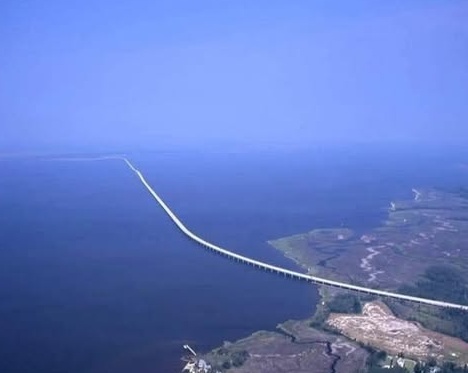
The bridge is dedicated to the memory of Virginia Dare, the first English child born in the Americas, in 1587.
The Virginia Dare Memorial Bridge rises to 65 feet at its highest point. It is supported by 88 concrete columns and more than 2,000 pilings. The bridge was designed with a 100-year life span. The bridge goes over the Croatan Sound in Manteo, Dare County. It is part of US 64 bypass.
Second and Third Longest Bridges in NC
Four of the longest bridges in NC are located in Dare County. The second-longest bridge in NC is the Wright Memorial Bridge. The Wright Memorial Bridge is 2.8 miles long. It goes across the Currituck Sound. This bridge is part of US Route 158. It connects Point Harbor and Kitty Hawk. The bridge’s name honors the Wright brothers. It first opened on September 27, 1930. In 1966, the first Wright Memorial Bridge was torn down and replaced.
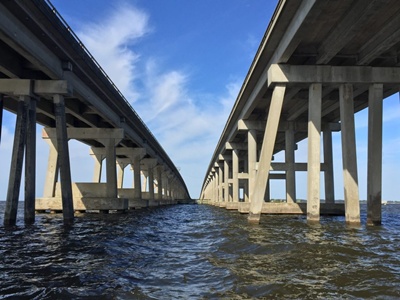
The second and current eastbound bridge opened in 1966, replacing the first Wright Memorial Bridge.
In 1995, a second parallel bridge was constructed to help with increasing traffic. The 1955 bridge is now the eastbound. The newer 1995 bridge added is the westbound bridge. Both bridges together provide four lanes of traffic to and from the northern areas of the Outer Banks.
Marc Basnight Bridge
Tied for the second-longest bridge in NC is the Marc Basnight Bridge. It is also 2.8 miles long and connects Bodie Island and Hatteras Island. This bridge in Dare County opened on February 25, 2019. It replaced the old Bonner Bridge.

The centerpiece of the bridge is 3,550 feet tall, allowing ships to navigate through the treacherous waters of Oregon Inlet. The bridge is a part of the vital Highway 12 hurricane evacuation route for the residents and tourists on Hatteras Island.
William B. Umstead Memorial Bridge
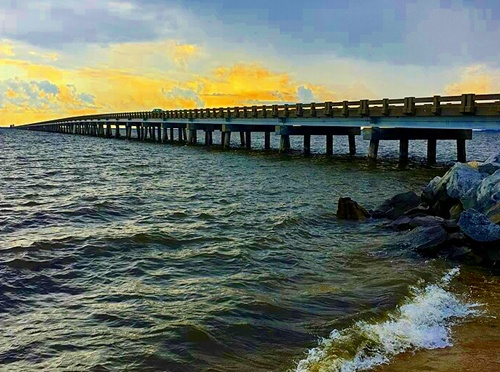
The fourth-longest bridge in NC is the William B. Umstead Memorial Bridge. It is 2.7 miles long. The bridge connects the community of Manns Harbor and Roanoke Island, stretching across the Croatan Sound. It was constructed in 1955.
The Rodanthe Bridge
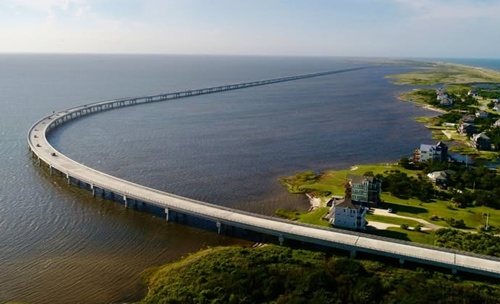
The newest bridge in Dare County is the Rodanthe Bridge, but most people refer to it as the Jug Handle Bridge. It is 2.4 miles long. The two-lane bridge crosses the Pamlico Sound. It was built after years of repeated overwash of N.C. 12 near Pea Island National Wildlife Refuge and in the village of Rodanthe on Hatteras Island. The bridge spans the Pamlico Sound between the Pea Island National Wildlife Refuge and Rodanthe, NC. This newest Outer Banks bridge opened to traffic on July 28, 2022.
Ocracoke Bridge?
Will there ever be a bridge from South Hatteras Island to Ocracoke over Hatteras Inlet? The chances are slim. It’s a sensitive subject. It may be great for tourism to Ocracoke, but would a bridge over Hatteras Inlet ruin the charm of remote Ocracoke Island?
Other reasons for no bridge to be built include: environmental, economic, and logistical considerations.
- Environmental Concerns: Hatteras Inlet is part of a sensitive ecosystem, including marshlands and habitats for various wildlife species. Constructing a bridge could disrupt these ecosystems, resulting in pollution of the water and disrupting wildlife habitats.
- Economic Factors: The cost of building and maintaining a Hatteras Inlet bridge would be astronomical. The cost of construction, ongoing maintenance, and the potential impacts on local tourism and local fishing industries are important considerations. The state thinks the NC Ferry System currently in place is sufficient for the level of traffic between the islands. Heavy traffic is usually only during the summer months.
- Historical Precedent: The ferry system has been in place for many years at the coast and is a well-established method of transport for residents and visitors. Locals and tourists appreciate the ferry experience, which has become a part of the culture and charm of the area. The ferry system also employs many locals, providing them with a stable income.
- Logistical Challenges: The distance and water depth of the inlet may pose engineering challenges. The Outer Banks are prone to severe weather events, including hurricanes, nor’easters, and rogue high tide events. A bridge would be vulnerable to the frequent storms and hurricanes.
